

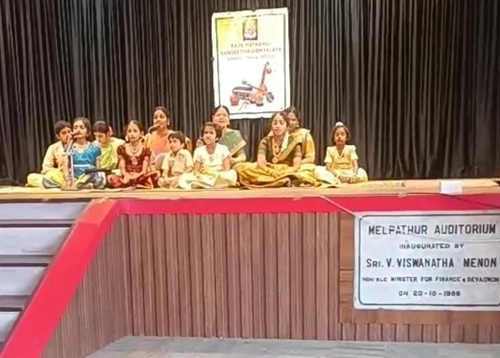
Carnatic vocal music classes begin with the basics, including learning the seven swaras (Sa, Ri, Ga, Ma, Pa, Da, Ni), voice training, and rhythm exercises. Students progress through Sarali Varisai, Janta Varisai, and Alankaras to build vocal strength and swara clarity. Simple songs like Geethams are introduced before moving to Swarajathis and Varnams, which enhance melody and rhythm understanding. As students advance, they learn Kritis of great composers, explore Raga Alapana (melodic improvisation), and practice Swara Kalpana (creative note patterns). Advanced training includes Ragam Tanam Pallavi (RTP) and concert preparation, focusing on improvisation and stage performance.
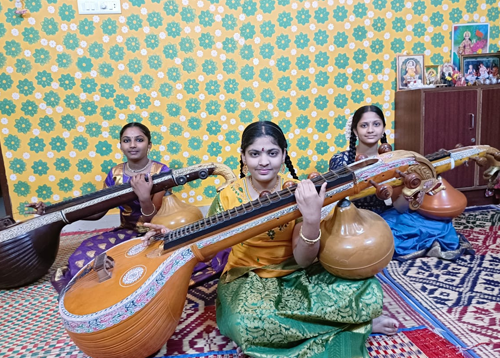
Veena music classes start with the basics, including learning the parts of the veena, proper sitting posture, and finger techniques. Beginners practice simple exercises like Sarali Varisai, Janta Varisai, and Alankaras to develop finger coordination and swara clarity. As students progress, they learn Geethams and easy varnams to improve melody and rhythm. Intermediate lessons focus on varnams, keerthanas, and basic manodharma (improvisation). Advanced training includes complex kritis, Raga Alapana, Tanam, and Ragam Tanam Pallavi (RTP), along with concert preparation and performance techniques.
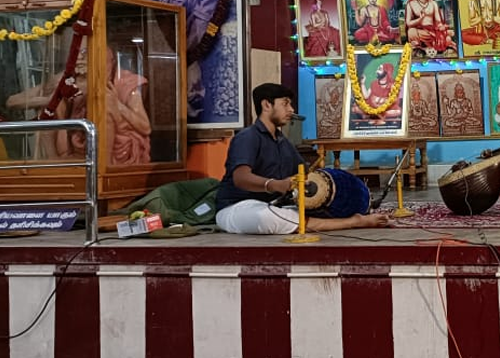
Mridangam music classes begin with the basics, including understanding the parts of the mridangam, proper playing posture, and hand techniques. Students start with basic strokes like Tha, Dhi, Thom, and Nam, followed by simple rhythmic exercises in Adi Tala. As they progress, they learn more complex patterns, mohra, korvai, and different talas like Rupaka and Misra Chapu. Intermediate lessons focus on accompaniment techniques for Carnatic compositions, improving speed, and developing rhythmic precision. Advanced training includes intricate tani avartanam (solo improvisation), cross-rhythms, and concert performance skills.
Bhajans and Slokas music classes begin with learning correct pronunciation, melody, and rhythm. Students start with simple devotional songs and slokas, focusing on proper intonation and expression. As they progress, they learn bhajans in different languages, understanding their meaning and devotional aspects. The classes also include basic tala (rhythm) training to maintain tempo while singing. Advanced training involves singing in different ragas, improvisation, and group singing techniques, helping students develop a deep connection with spiritual and traditional music.
